Uncategorized

The Escalating Threat of $70 Games in Light of the Demand for More Affordable Options on Steam
### The 2026 PC and Console Gaming Report: An Evolution in Gaming Revenue

The 2026 PC and Console Gaming Report from the prominent video game analytics company Newzoo has revealed noteworthy trends in the gaming sector, suggesting a significant evolution in buying patterns and revenue generation within the gaming industry. Released on March 12, the report presents essential insights, particularly focusing on the growing popularity of “sub-$30” games on PC platforms and the projected growth of PC gaming revenue.

#### Surge in Sub-$30 Game Purchases

A standout figure from the report is the impressive 156 percent rise in sub-$30 game purchases on PC from 2022 to 2025. This increase highlights a shift in consumer preferences, as players are leaning towards more affordable game options. The report asserts that this growth is not merely a result of discounts on existing titles but is mainly driven by a strong array of new releases priced under $30. By 2025, sub-$30 games made up 9 percent of overall PC revenue, showcasing their growing significance in the market.

#### Consequences for PC Compared to Console Revenue

Newzoo’s forecasts indicate that PC game sales will overtake the total revenue of leading consoles such as Nintendo’s Switch 2, PlayStation 5, and Xbox Series S/X by 2028. This prediction is particularly remarkable given the dual revenue sources from subscription services utilized by these console leaders, such as PlayStation Plus and Xbox Games Pass, which Steam does not provide. Nonetheless, the expected rise in PC sales raises vital questions about the future of the console market.

#### The Drop in Subscription-based MMORPG Revenue

While the report highlights the ascendance of sub-$30 games, it also notes a decline in revenue from subscription-based MMORPGs, suggesting a potential shift in consumer priorities and gaming habits. This decrease may demonstrate broader trends as players look for value in standalone, cost-effective games over long-term subscriptions.

#### The Cycle of Console Generations

Ben Porter, Newzoo’s Director of Consulting, points out the cyclical nature of console generations as a factor affecting spending behaviors. In contrast to the PC gaming market, which can evolve steadily and naturally, the console market faces distinct cycles linked to new hardware releases and upgrades. This contrast aids in the consistent expansion of the PC sector, nurturing a varied ecosystem of gaming choices at multiple price levels.

#### Upcoming Trends and Expectations

As the gaming landscape changes, the impacts of the sub-$30 market trend will be closely observed. Titles like “Slay the Spire 2,” anticipated in the upcoming years, will be crucial to watch in Newzoo’s future reports, as their sales may further demonstrate the viability and significance of budget-friendly gaming options in an increasingly competitive environment.

In summary, the findings from the 2026 PC and Console Gaming Report reveal a significant shift in consumer preferences towards economical gaming, forecasting major changes in revenue dynamics between PC and console platforms. As the industry continues to evolve, stakeholders must remain vigilant regarding emerging trends that will influence the future of gaming.

Uncategorized

Skyblivion Project Lead Reports Positive Progress on Oblivion Remake Mod During 2026 Showcase

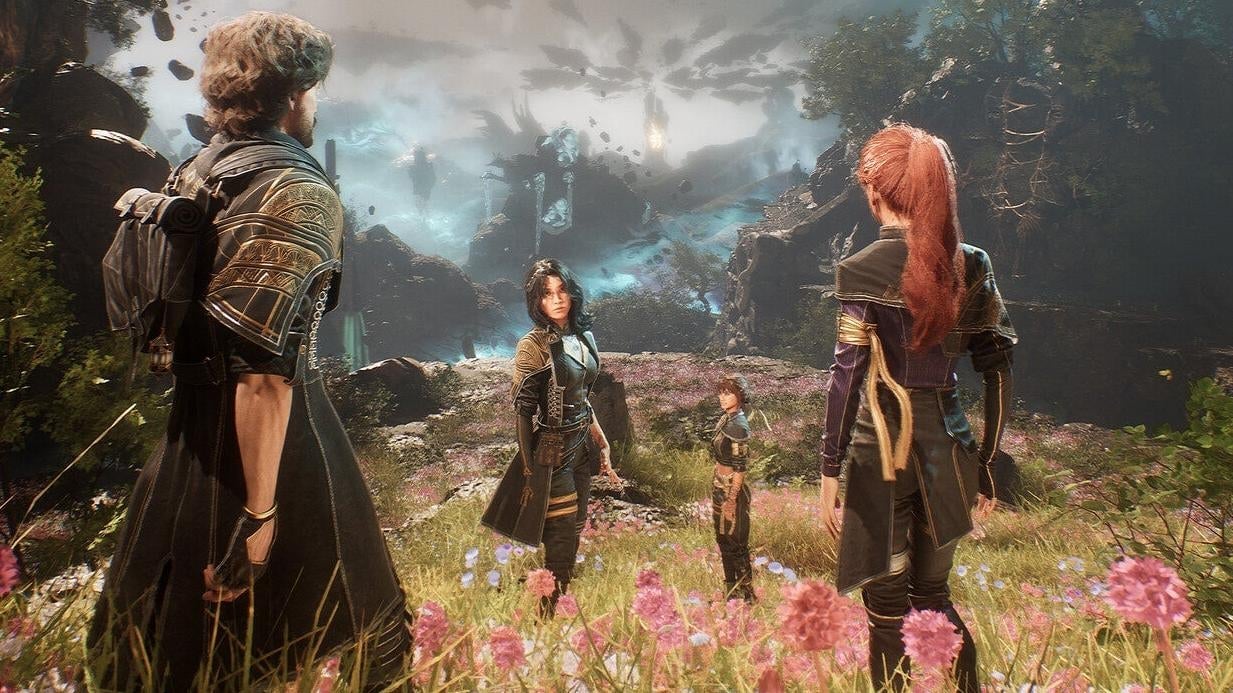
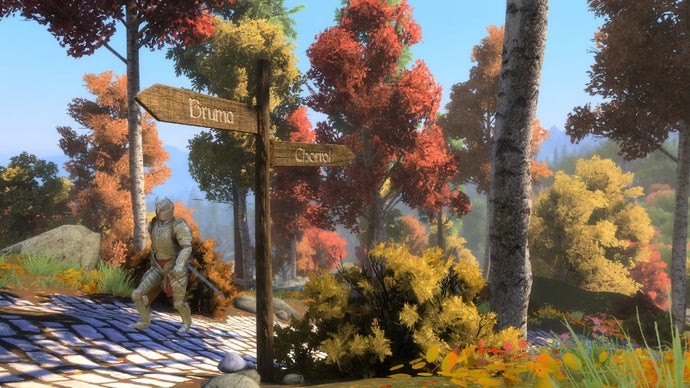
The team behind Skyblivion, the massive mod remake of Oblivion in Skyrim‘s engine, have shown off a few late-stage Mages Guild quests in the project’s first proper showcase livestream since its release was delayed to 2026 late last year. According to project lead Kyle ‘Rebelzize’ Rebel, Skyblivion’s currently “in a great place” and its team are still aiming to release it “as soon as possible”.

If you missed it, last year’s Skyblivion delay followed an ex- level and world designer on the project alleging that the mod’s previous 2025 release goal was “unachievable”, in a post which also accused Rebel and Skyblivion implementation lead Heavy Burns of mismanaging communication within the mod’s team. In response, Heavy Burns asserted that “many” of the claims in the ex-dev’s post were “either misrepresented or just untrue”.

Read more

Uncategorized

Keiichi Toyama, the mind behind Silent Hill and Gravity Rush, is seeking talent for a new expansive project.

**Keiichi Toyama Reveals Hiring for New Extensive Project at Bokeh Game Studios**

Keiichi Toyama, celebrated for his contributions to legendary games such as Silent Hill, Siren, and Gravity Rush, is currently seeking talent for a new extensive project at Bokeh Game Studios. This announcement follows Toyama’s affirmation last summer that the studio is not pursuing a sequel to Slitterhead. The hiring initiative was shared through a Japanese employment platform.

Toyama underscores the studio’s commitment to creativity and its pursuit of distinctive experiences. “We don’t create things that anyone else could create,” Toyama remarked, emphasizing the team’s dedication to innovation and their ongoing exploration of the essential question, “Why are we creating this?” The studio aims to develop projects that appeal to imaginative individuals ready to take on challenges and contribute to groundbreaking endeavors.

While the new project entails difficulties linked to experimentation, Toyama views it as a chance for intense involvement in the creative journey, granting team members the opportunity to shape the final result directly. Becoming part of the project at this phase promises a priceless experience for participants.

Bokeh Game Studios, founded in 2020, launched its inaugural title, Slitterhead, in 2024. The game garnered mixed feedback, with some celebrating its daring aspects while others criticized its vulgar and sordid features. Despite the divided responses, Toyama remains committed to expanding creative frontiers with fresh, original projects.

As Bokeh Game Studios takes on this ambitious endeavor, the gaming community is eagerly awaiting the innovative and distinctive experiences that Toyama and his team will introduce to the industry.

Uncategorized

GTA Roleplay Unveils High-Stakes Game of Hide and Seek Where Players Gamble Their Vehicles

My Latest Fascination in GTA 5 Roleplay: A Unique Spin on Hide-and-Seek

As a committed player of Grand Theft Auto 5 (GTA 5) and a fan of its roleplaying servers, my latest obsession is an interesting variation on a childhood favorite—hide-and-seek. Yet, this isn’t your typical game of hide-and-seek. The stakes are elevated, and the consequence—or reward—imbues the game with the chaotic essence that characterizes GTA. When you fail, the victor gains the privilege to wreck your vehicle, because, in the realm of GTA, material belongings are generally fleeting.

I find myself speeding down the Los Santos freeway in my cherished, though worn, tow truck named Rusty. It has taken me six months of tedious garbage collection to save up and customize this ride. As the newest trend of hide-and-seek spreads through the roleplay community, I’m confronted with the prospect of letting a random player annihilate my treasured asset if I don’t win. All because I’m not great at this game of stealth.

In the end, I gave in. After some inner turmoil, I made a U-turn, accepting my destiny. Returning to the designated spot—the construction site in Pillbox Hill, Downtown Los Santos—I confronted my defeat. Watching ‘YEPYEP2006′ gleefully demolish my vehicle, reminiscent of the bonus stage in Street Fighter 2, was quite painful.

Financially, it was a significant blow. My gaming account took a hit, especially since Rusty wasn’t insured. Unlike the main version of GTA Online, recovering a wrecked vehicle in RP is far from just contacting Mors Mutual and pressing a few buttons. Instead, it involves reaching out to another player to tow, repair, and aggressively charge you for the service.

With only $1,250, a week’s earnings from waste management, I was far from the $9,000 needed to restore ol’ Rusty. Wagering my truck in this high-stakes hide-and-seek began to feel recklessly thrilling. It’s this adrenaline that drives my recent obsession with this RP variation.

Surprisingly, I had a run of three wins prior. During a gripping 15-minute match, I cleverly hid on the roof of Michael De Santa’s mansion. Another hideout—an Elyssian Island nightclub—proved to be an ideal stronghold. However, the piping on the third floor of the Mile High Club was inadequate, highlighting the unexpected tactics within this classic game.

Regardless of how well I know GTA’s world, the creativity of the players never fails to amaze me. For years, I have enjoyed the inventive twists of the roleplay scene, but hide-and-seek in the thoroughly explored map has plunged me deeper into a captivating nostalgia—from Garry’s Mod’s prop hunt to schoolyard games from three decades ago.

So, farewell, Rusty—my dear friend. It’s back to the grind of garbage collection. A tip for those curious about GTA’s hide-and-seek RP: make sure your car is insured. You’ll be grateful later.

Uncategorized

Google Allocates $1 Million for AI-Created Children’s Videos in Response to Surge in Low-Quality Content on YouTube

**The New Era of Children’s Media on YouTube: AI and Animated Content**

In the rapidly changing world of children’s media, YouTube has emerged as a key player, often dubbed an automated babysitter that numerous parents depend on. Its algorithm, however, has taken viewers through a roller coaster of surreal material to more organized children’s programming like “CoComelon,” “Blippi,” and “Ms. Rachel.” Yet, Google appears ready to shake things up once again by investing in AI-driven content creation, raising questions about the future of children’s entertainment on the platform.

Recent reports highlight Google’s $1 million investment in Animaj, an animation studio focused on producing AI-generated content for young viewers. This funding marks a notable milestone as it is the inaugural direct investment by YouTube into a children’s media studio. Further solidifying this investment, Animaj has been incorporated into Google’s DeepMind program, obtaining early access to Veo, a video-generation technology.

Animaj co-founder Sixte de Vauplane addressed the urgent concern of “AI slop,” a term that denotes low-quality, poorly crafted AI-generated content. He recognizes that although there is a strong demand for innovative programming for children, very few players in the industry are capable of utilizing AI responsibly and effectively. With Google’s investment, Animaj aspires to leverage AI’s potential to introduce freshness and relevance to children’s content, while being keenly aware of the risks associated with automated creation.

Historically, YouTube has had a rocky relationship with children’s content. Just a few years back, the platform faced major backlash, culminating in a $170 million settlement with the FTC over alleged breaches of children’s privacy laws. The platform struggled to regulate the surreal and sometimes predatory nature of content available to young audiences. The rollout of more normalized content helped to alleviate some concerns, but the looming threat of AI’s influence remains significant.

As Google embraces the opportunities of AI to create material, it must also confront the challenges posed by this technology throughout its platform. Other social media giants like Facebook and TikTok have also encountered scrutiny over AI-generated content, which frequently lacks depth and quality. YouTube, in particular, is now caught in the middle, responsible for moderating an increasing number of AI-generated videos while maintaining the integrity of its platform.

Ultimately, Google’s investment in Animaj is a daring move toward revolutionizing children’s entertainment through technology. The launch of AI-driven content creation may provide a preview of what the future holds for platforms like YouTube, where innovation is both a promise and a challenge. As the conversation around responsible AI usage advances, parents and guardians will be observing closely to see how this investment reshapes the media landscape for their children.

Uncategorized

A Weekly Overview of Sunday News Publications

Sundays are for lying in bed and thinking of ways to interfere with your downstairs neighbour’s space as much as their loud music interferes with yours. Crucially the method cannot be one that can be immediately turned around and used back against you. Perhaps taking up the aim of walking up and down the creaking stairs 100 times a day or investing in a door bell with a very loud and long tune.

Read more

Uncategorized

Embark Replaces Arc Raiders’ AI Voice Lines with Human Performers While Continuing to Utilize AI Technology Internally

The biggest stain on Arc Raiders is easily the use of AI voice acting. It stinks! There’s no soul to it, and it deprives actors from being able to perform their craft. But, based on some comments from CEO Patrick Söderlund, it sounds like Embark are finally starting to realise that, oh yeah, it is actually better to work with a real human being (though this doesn’t mean they’re not using AI any more).

Read more

Uncategorized

“An Engaging Blend of Papers, Please, Severance, and Pro Evolution Soccer 2”

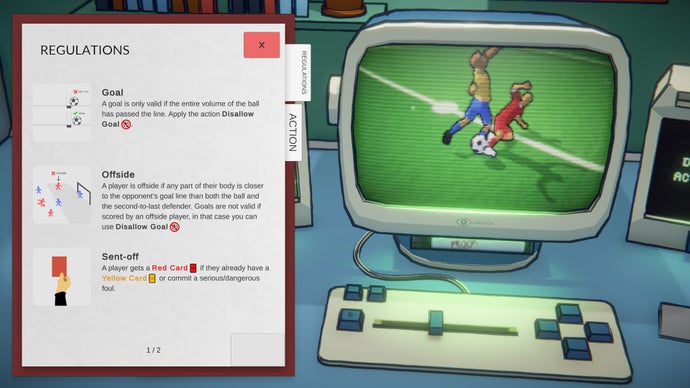
“Popular game, but you do this instead,” is a tale as old as time, birthing efforts that range from rote to deliciously fresh. Making comparisons like that is always a gamble, as you’re immediately pointing towards the gold standard that your game has to at least be almost on par with, perhaps even better, to make any real headway. And while I haven’t played Eye of the Match, it being billed as Papers, Please, but you’re a virtual referee for football matches is certainly a pitch I can get behind.

Read more

Uncategorized

Venture Capitalist Voices Worry Regarding Adverse Feelings Among Gamers Towards AI

### GDC Survey Highlights Game Developers’ Worries About Generative AI

Annually, the Game Developers Conference (GDC) releases a survey that gauges the feelings of individuals in the gaming sector. This year’s results, unveiled prior to the week-long event, demonstrate a significant change in how generative AI is viewed within the gaming community. A mere 7 percent of participants in the survey characterized generative AI as “beneficial for the industry,” reflecting a considerable drop from two years ago and indicating an increase in skepticism among developers and creatives.

#### Investor Views on AI in the Gaming Sector

Moritz Baier-Lentz from Lightspeed Venture Partners conveyed his surprise and dismay at the widespread negativity towards AI at GDC. His investment firm has stakes in various AI enterprises, including Anthropic, a significant entity in the sector. Baier-Lentz promotes a more positive perspective, suggesting that gaming has historically embraced “wonderful new technologies.” Nonetheless, the disconnection between industry leaders and developers has never been clearer, as many remain wary about AI’s involvement in gaming.

The investor noted that one catalyst for this pessimism might be the wave of layoffs impacting the industry. After a spike in investments during the COVID-19 pandemic, numerous companies are now confronting economic challenges, resulting in workforce reductions. While some corporate leaders may regard AI as a method to optimize operations and cut labor expenses, this viewpoint sharply contrasts with the feelings of developers who directly experience these changes.

#### Financial and Environmental Issues

The debate concerning AI goes beyond job stability. The ecological ramifications of extensive AI utilization are alarming, especially regarding the considerable resources dedicated to data farms. These farms lead to a “disruptive RAM crunch,” driving up hardware costs and making PC gaming more exclusive to affluent individuals. Such developments not only influence accessibility but also provoke ethical dilemmas about the industry’s trajectory.

#### Microsoft’s AI Initiative and Project Helix

In spite of the controversies surrounding AI, Microsoft has persisted in making substantial investments in artificial intelligence technologies across its platforms. At GDC, Xbox unveiled plans for its forthcoming console, provisionally named Project Helix. However, the company approached AI with caution during the conference, strategically holding off until the conclusion of the event to reveal a significant announcement: the integration of their AI client, Copilot, into Xbox consoles later this year.

This move demonstrates a wider recognition of the mixed reactions towards AI within the gaming sector. While Microsoft acknowledges AI’s potential, it seems to be treading carefully, aware of the backlash that currently envelops the technology.

### Conclusion

As the GDC survey reveals, generative AI continues to be a divisive issue in the gaming industry, with developers voicing substantial worries regarding its ramifications. While investors and corporate executives may perceive chances for innovation and efficiency, the concerns raised by creators illustrate a deeper discomfort surrounding job security, economic inequality, and ethical considerations. The ongoing discussion about AI’s place in gaming will undoubtedly influence the industry’s future, as both developers and executives maneuver through the intricacies of adopting new technologies while addressing the community’s apprehensions.